Japanese elections
This week I learned that the voting system in Japan is completely different from that in Taiwan!
Voters first receive a "polling station entry ticket" from the government. On election day, they can receive their ballot paper simply by bringing this ticket. No other identification is required, and the process is very smooth.
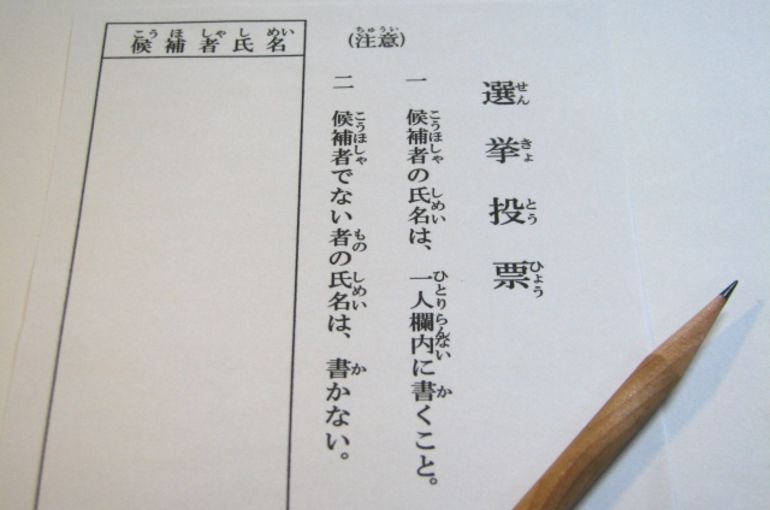
Once inside the polling station, something even more unique happens. Instead of stamping or circling numbers on the ballot, you write the candidate's name in pencil! This is quite novel for someone used to the Taiwanese voting system. I was curious what would happen if I couldn't read, so I asked my colleague. He told me that in reality, this rarely happens in Japan, as literacy rates are high.
Furthermore, early voting is available in Japan. It usually takes place one to two weeks before the election. This is to accommodate people who cannot go out on election day due to work or other commitments, and to allow as many people as possible to exercise their right to vote.
Through my interactions with colleagues, I have the opportunity to gain a deeper understanding of each country's institutional design and the underlying thinking, which I feel is the best part of working in Japan.
[Chinese] Japanese voting method
Recently, a good deal has been achieved in the Japanese election period, and the current Japanese voting method is very good, and Taiwan is truly unique!
For those who are eligible to vote, the "admission ticket" sent by the government will be sent to the party.
Governmental LINE account for consultation and request for consultation on real estate, compensation for human service, and gratitude
【English】Japan's Voting system
This week, I learned that Japan's voting system is completely different from Taiwan's!
Voters first receive a “polling station admission ticket” from the government. On election day, simply bringing this ticket allows you to collect your ballot paper. No other ID is required, making the process extremely smooth.
Upon entering the polling station, another unique practice takes place. Instead of stamping numbers or circling circles on the ballot paper, you write the candidate's name in pencil! This is quite novel for those accustomed to Taiwan's voting system. I was curious what happens if someone cannot read, so I asked a colleague. They explained that Japan's literacy rate is high, so such instances are actually very rare.
Furthermore, early voting is possible in Japan. This typically takes place one to two weeks before election day. This accommodates those unable to vote on election day due to work or other commitments, enabling more people to exercise their right to vote.
Through interactions with colleagues, I gain deeper insights into the institutional designs and underlying philosophies of different countries. This, I feel, is one of the true joys of working in Japan.